How to Perfect Your Elevator Pitch
Everything You Need to Create to Nail Your Elevator Pitch Today
You need an elevator pitch. It doesn’t matter if you’re a full-time employee who freelances on the side or a full-time freelancer, you need an elevator pitch. In fact, depending on what you do, you might need more than one. I, for example, have three.
You may have resisted this fact until now but this article will walk you through everything you need to know about elevator pitches. By the end, you’ll be ready to start pitching people in the very next elevator you take. So let’s get started.
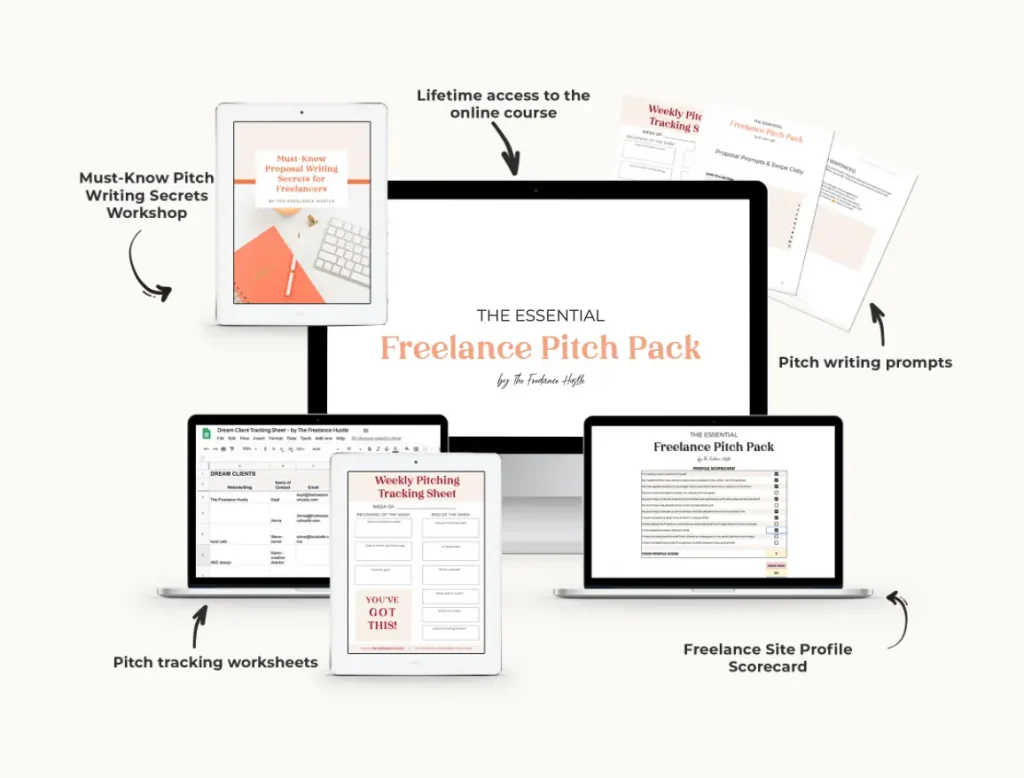
Trying to land more clients and projects?
You need the Essential Pitch Pack!
YES PLEASE »
What Is an Elevator Pitch?
An elevator pitch is a 30-second explanation of what you do and for whom. A good elevator pitch is short and sweet and leaves the listener curious to find out more.
It’s called an elevator pitch because you were supposed to be able to deliver it during a short elevator ride. We don’t really chat with people anymore during elevator rides though, so don’t feel like you need to pitch everyone on the next elevator you take.
When Do You Use an Elevator Pitch?
Having a good elevator pitch (or three!) is super handy whenever you meet someone new or that you haven’t seen in a while. You can use your pitch with anyone from a new contact at a networking event to someone you’re chatting to at the grocery store to your Aunt Ida at the next family reunion.
Because an elevator pitch is such a succinct overview of what you do, it’s handy to have to explain your work to someone outside your industry. This person may not understand the nuances of your work but might still know people who need your freelance skills.
Your Elevator Pitch Structure
Constructing an elevator pitch isn’t hard unless you’re trying to do it on the spot. It’s a really good idea to take some time to sit down and write out your elevator pitch in advance. This allows you to make sure it most concisely and accurately explains who you are and what you do.
The components of a good elevator pitch are:
- Who I am
- What I do
- Who I do it for
- How I do it
- Why I do it (optional)
The most common elevator pitch structure goes “I am a ________. I help _______ do ________ by __________. ” If it makes sense for your pitch to be structured in a different way, go for it! Just make sure to include the important components and that your listener can follow your explanation.

Elevator Pitches Examples
If you were a website designer working with small businesses, your elevator pitch might be:
“I’m a website designer. I help small businesses engage with their audiences online by designing captivating websites. The websites I design take into account who their audience is, what they love, and what they need in order to trust the company itself.”
If you were a freelance virtual assistant working with remote entrepreneurs, your elevator pitch might be:
“I’m a virtual assistant. I help entrepreneurs manage the overwhelming workload of starting a business by taking over administrative responsibilities like email and calendars and allowing them to focus on the big picture stuff to grow their business.”
If you were a blog writer who writes for eCommerce businesses, your elevator pitch might be:
“I’m a blog writer. I help eCommerce businesses produce the content they need to show their audience that their products will solve their customers’ problems. Great content is searchable, educational, and engaging and I make sure my clients have great content.”
These are just a few short examples. You really should go for a longer elevator pitch as you do have up to 30 seconds to fill. A great way to know what else to include is by letting the other person pitch you first and tailoring your pitch to the conversation you just had with them.

Things to Remember When Pitching
Even if your pitch is perfect, your delivery matters. You need the person you’re speaking with to pay attention for the entire 30 seconds. (That might sound easy but the average human attention span is now roughly eight seconds.)
If you want an attentive listener who is absorbing everything you’re saying in your elevator pitch and who is inclined to like you, be sure to:
Speak Slowly and Clearly so Every Word Is Understood
You’re packing a lot of really important information into a very brief period so it might feel like it’s better to get through as much as possible, as quickly as possible. That will just lead to confusion and misunderstandings. Speak clearly and slowly so your listener absorbs every word without having to pause and think.
That said, don’t speak so slowly that they feel like you’re being weird or condescending. Keep the pace at something a toddler or your neighbor with a hearing aid can manage to understand. Slow enough that every word is distinct but fast enough that it feels like a real conversation.
Keep Your Facial Expression/Body Language Friendly and Open
You might be inclined to cross your arms to reassure yourself or frown as you try to remember the exact wording of your pitch but resist the urge. Having open, friendly body language allows the listener to focus on your words instead of what might be wrong. We’re all super self-involved so closed-off body language may cause them to wonder what they did/said wrong instead of paying attention to you.
We’re also inclined to like people who like us and friendly, open body language conveys liking. If you smile, the other person is likely to smile too, and it will convey the impression that you like what you do, which expresses confidence and competence as well.
Avoid Speaking in a Monotone
We tune out monotonous noise so keep your listener engaged by making sure your have a natural cadence to your elevator pitch. If your natural cadence is fairly monotone, practice making your pitch a little livelier.
You don’t have to do a dramatic reading of your elevator pitch but a little energy here makes a huge difference.

Have More Than One Elevator Pitch
It’s unlikely that you do just one thing for just one type of niche client so it’s helpful to have several elevator pitches that allow you to connect with multiple types of clients. Even if you are that niche, you might need an elevator pitch tailored to your potential clients that uses all the right industry lingo and another one for people outside your industry who might be able to connect you with your potential clients.
You don’t need to prepare for every potential person but having a few standardized pitches you can tweak in the moment will make it feel much more comfortable to tell someone new what you do. The clearer you can be in your pitch, the easier it is for them to think of someone (possibly themselves) who might need your help.
Go Forth and Pitch
Now that you have a fantastic elevator pitch (or three) that you’re comfortable reciting without looking at your notes, it’s time to go forth and start practicing your elevator pitch on real humans. Don’t worry if you mess up the wording a little bit or forget to smile every time.
You’ll inevitably get better with practice so start practicing and don’t be surprised if your networking and referral business leads suddenly increase.
Pin these for later! 👇