Do I Need a Website? 10 Reasons Freelancers Do!
I know what you’re thinking: why do I need a website — can’t I just send a PDF with my portfolio and refer people to my LinkedIn page?
Honestly, there are SO MANY places online to create a professional profile for you and your small business – LinkedIn, UpWork, Freelancer, Behance. So, why do you really need your own website as a freelancer? Is it really necessary?
The short answer – YES! You absolutely need a business website. If you want to scale your business, charge more and grow your solid client base, you need a website.
Professional profiles are important for attracting potential customers who are browsing for freelancers and small businesses to work with on those sites – but that only covers a small fraction of prospective clients. Having a dedicated website for your freelance business is one of the most important things you can do to stand out from the crowd.
If you have dreams of growing your business beyond gigs on Upwork and are ready to start attracting ideal clients who pay rates you’re excited about, you’re going to have to start thinking outside the box (and getting away from the crowd).
Setting up a small business website for your freelancing practice is the first step in getting clients to come to you.
Your professional website is the digital storefront for your brand. It acts as both your portfolio, and a place for you to introduce additional streams of income. A website increases your visibility and up-levels your brand from $7/hour UpWork contractor to digital marketing business owner.
And I’m living proof…
I created a website and my business took off!
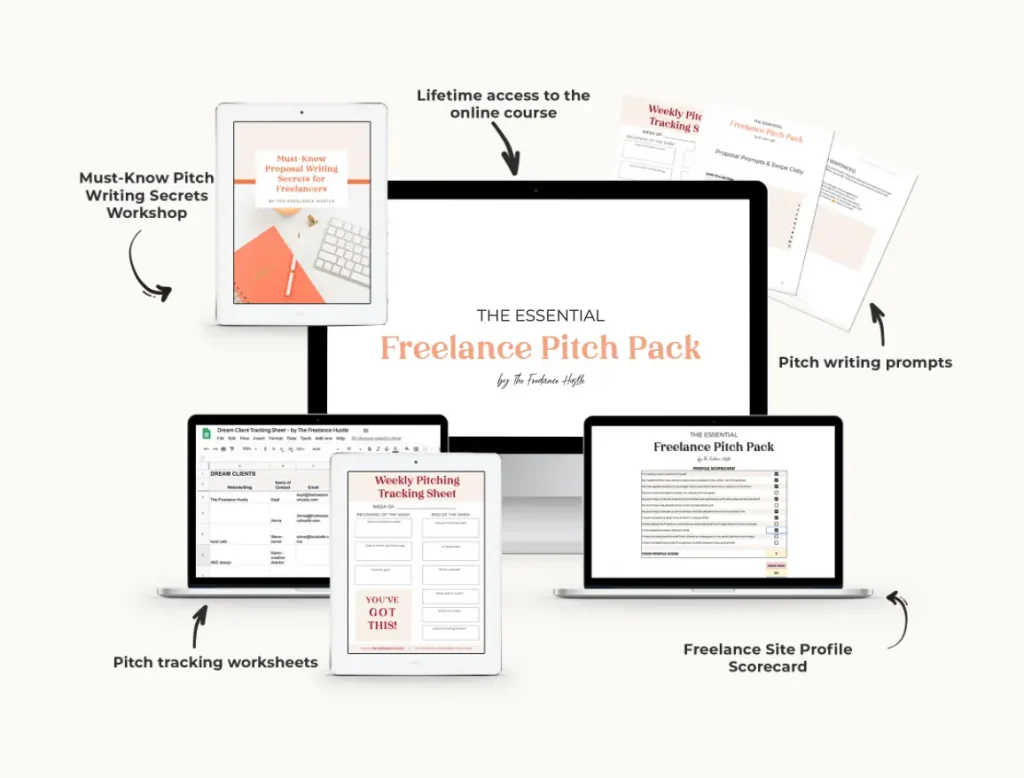
Trying to land more clients and projects?
You need the Essential Pitch Pack!
YES PLEASE »
Here’s what my freelance website did for me:
When I first started freelancing, I was charging a tiny hourly rate for my services. I needed to have at least 10 or 11 clients at a time, and work 60+ hours a week, just to make enough money. And I was spending SO MUCH TIME bidding on new jobs every week – very few of which turned into new contracts.
Honestly, I wasted a lot of time.
It wasn’t until I created my very own freelance website that I started getting inquiries for my work. I suddenly had people coming to me! They were finding me through my blog, through a social media platform or two, and through Facebook groups I was active in.
Prospective clients were now able to go to my website and see the services I offered. And suddenly, people were reaching out to me to work together.
I found that with a single website build (I know own more than one – but that’s another story for another time) I could:
- Look more professional
- Charge higher prices
- Package my services
- Be more selective with the projects I took
- Work less and make more
I realized I could earn the same amount of money working with only a few clients at a time. Plus, I could provide better services to them. And I could stop spending so much time pitching and getting nowhere!
My website was a game changer.
But, like you, I struggled at the beginning to figure out WHY I really needed a website. If it sounds like you’re in a similar place, I’ve already sat down and figured out 11 key reasons freelancers need a website. Here’s what you need to know:
So, why do I need a website?

1. Stand out professionally
You and I both know you’re a professional, but the rest of the world might not be in the loop. That’s why taking the time to build a home for your business on the web let’s you show the world that you take your business seriously — so they should too!
The simple act of having a professionally branded website (even if it’s just yourname.com) makes you look hella professional. You’re no longer a hobby or day-dreaming freelancer, you’re a true entrepreneur.
Your website communicates who you are, what you do, and who you work with. It shows potential clients what they can expect from working with you. If you want to be taken seriously as an entrepreneur and charge the rates you’re daydreaming about, you NEED a website.
Step your professional game up by setting up a client portal with Honeybook
2. Personalize your portfolio
Any potential client will want to see a portfolio of your work before they hire you.
Of course, there are plenty of places where you can build one online, but adding one to your own website allows you to personalize yours. Show off your skills, let your clients see the past work you’ve done, and help them imagine what you can do for them.
Your portfolio style will depend on the type of work you do. You can add images, videos, text, or links. Here’s a few ideas:
- Link to guest posts or blog posts you’ve written
- Display websites you’ve designed
- If you’ve worked on social media campaigns, share screenshots and designs you used
And if you can, add in some results. For example:
- This campaign increased reach by X% or got X% clickthrough rating
- The new web design increased email signups by X%
Adding metrics can show that your work not only looks good, but gets results.
Portfolios are an expression of you and your work, so get creative and have fun with it!

3. Advertise your services (and maybe your pricing, too!)
Having your own website gives you an opportunity to build a service page where prospective clients can find out what services you offer.
Providing prospects with the details of what services you provide and what it looks like to work with gives them an idea of what to expect before you even get on the phone. Not only does this help provide a little introduction, it also cuts down on the back-and-forth with clients that might not be the right fit.
Whether people found you through Google (via your superior SEO skills) or someone referred you, the service page can help someone determine whether or not you can really help them.
It’s important to remember that you’re not out there to provide services for everyone — you’ll end up making A LOT more money in the long run if you focus in on serving one type of client.
Not only does your website clarify what you do, it also talks about WHO you help and HOW you do that. It makes a big impact on whether or not you and a prospective client take it to the next level.
What about talking about your pricing?
While you certainly don’t have to, you also have the opportunity to display your pricing on your website.
Whether or not you share your pricing is a personal choice. There are plenty of freelancers who don’t do this because they don’t want to feel like they have to stick with a pricing scheme if the project really calls for something more.
However, you can throw out some numbers as a starting point — this can give your clients an idea of what the investment is going to be and whether or not they can fit it in their budget. It also gives you a packing to stand firmly on your pricing (though it is YOUR pricing, you don’t have to justify it) and avoid lowball offers.
From there I recommend embedding a form that connects directly to your client management software (hello, Honeybook!). That way when someone’s ready to get started, they can get started right away.
4. Show off client testimonials
Social proof can be gold.
Testimonials add an extra layer to your portfolio by adding another level of trust. You can talk about how great you are all day long, but it’s considerably more believable for a potential client when they hear it from someone else.
Make sure you add any rave reviews you get from anyone you’ve worked with — no matter how small the project was.
Don’t think you have any testimonials? You might be able to use:
- Reviews from freelancing sites like UpWork
- LinkedIn recommendations
- Praise you’ve gotten for work on social media posts
- Nice emails from clients thanking you for your work
However make sure that you remove the name and any identifying information from the reviews, unless you have express permission.
Always ask for a testimonial once you’ve finished a project, and get permission to post it on your website. Bonus points if they let you use a headshot – people like to see human faces.
A good testimonial can help to take a client from a ‘maybe’ to a ‘yes’ without you having to do any extra work.
5. Have somewhere to send clients
When you meet a potential client – whether in person or online – you want to make a great first impression, right? You want that person to take you seriously, to think of you as a pro. And you want to give them somewhere to go to get more information about you.
That’s where your freelance website comes in.
Having a website to send them to is a great way to continue the conversation. They’ll immediately get to see some of your work and the services you offer, allowing them to make an instant connection in their mind of how you can help them (or someone they know).
Your friends, family, past clients, and network can also more easily make referrals for you when you have a website.
Every time someone tells me about a freelancer or agency I should hire, my immediate response is “cool, send me their website so I can check them out.” If they don’t have a website, I’m unlikely to even consider them because it’s so much more work for me to find and connect with them.
You can put your website on your business card, your social media bios, and your freelance job site profiles so your target audience can always find out more about you.
6. Build an email list
Have you ever heard the saying the money is in the list?
They’re talking about email lists. When you have an email list of people who are interested in what you are doing, want to hear from you, and like your work, you’re only an email away from getting a new client.
An email list allows you to launch promotions or specials on your services. You can send out offers and reminders to book a spot with you. When you’re low on work, if you’ve got a list it’s an immediate way to get in touch with potential clients who’ve already heard of you and like what you have to say.
If you ever want to launch products – ebooks, courses, prints, etc. – or hold a sale, an email list is an absolute must-have.
Your website is the best way to start building your email list now. Even if you don’t think you need a list right away, you’ll wish you had started building one earlier.
I highly recommend adding a quick lead magnet to your website, something that helps your ideal but that you don’t have to personally deliver. Overall this will give you a better user experience, a chance to build credibility, and help with lead generation.
7. Share Content
Content is king. It’s a requirement for any business these days, and freelancers are no exception to that rule.
It’s important that you regularly publish content because it:
- helps to establish you as an expert
- shows clients what you can do
- builds trust
- can add to your portfolio
- helps you get found on social media
- helps SEO
- answers common questions your clients have
And that’s just a few of the reasons you need content.
Content can be anything you’re creating – blog posts, ebooks, checklists, guides, resources, designs, social media posts, photos. However, it should be note that while the content management process tends to be more involved than other social platforms, blog posts with proper search engine optimization will have the biggest impact on getting found.
8. Streamline Onboarding New Clients
Once you have clients coming to you (instead of you chasing them on bidding sites), a website can help you manage your new client leads like a pro.
On your contact page, embed a form or questionnaire for clients to get in touch with you about working together. This way, you’re taking the guesswork out of it by telling them exactly what you need to know.
You can even take it a step further by embedding a booking calendar (Honeybook has one!) so potential clients can book a call with you with just a few clicks.
There are so many options for automating client onboarding these days, and they all start with your website. Anything you can do that makes it easier for your clients AND easier for you is a major win-win.
9. Highlight your personality
Your clients want to work with YOU, not some faceless company. But how do they get to know the real you in this increasingly digital world? Through your website!
Your website is the digital home that represents you and your business. You can include your shining personality alongside your site design, style, images, and copy. This gives site visitors and potential clients a chance to get a better idea of who you are and what you’re like.
When you’re able to share a little bit more about yourself, you have an opportunity to build a deeper connection. This is much more enticing than what they’d get from simply reading your “Social Media Consultant” headline on LinkedIn.
Maybe on your about page you talk about your love for hiking on the weekends, or your constant quest for the best sandwich in every city you visit (just me?), or your crazy obsession with your dog. Any of these things can make a client say “aww, me too!” and feel an instant connection with you. They’ll start to like you before they even meet you – I call that an effective website!
Let your personality shine through and you will start attracting more of your target audience, helping you build a business online that you love.

10. Stand out from the crowd
There are A LOT of freelancers out there now-a-days. This doesn’t mean that you can’t make a success out of it, you seriously can! But does mean you need to be prepared to put a bit of extra effort into differentiating yourself from the crowd.
Do you know how many clients have told me about horror stories with freelancers? Honestly, I stopped keeping track because there was so many. Finding people from Upwork and Fiverr just doesn’t cut it anymore.
Clients hire a freelancer and suddenly they disappear halfway through the job. They stop responding to emails and texts. Or the freelancer said they could do a job but they really couldn’t. The result is the client loses money and loses trust in freelancers as a whole.
While creating a small business website won’t fix that entirely, it does put you on the same plane as the business owners looking for help.
It communicates that you’re a professional that they can trust. Your content, testimonials, and photos all help to convey that you take your business seriously – and you won’t ghost on a client!

Wrap up: Why do I need a website as a freelancer
Bottom line is, a website will help you grow your small businesses’ online presence, attract new clients, and make more money.
If you’re sick of chasing after clients, bidding on poorly-paid jobs, and rushing to get clients when you thought things were going well, a small business website can help. While it’s not guaranteed to help you rake in millions tomorrow, it can make a big impact and help you find more potential customers.
Not only that, but a good website gives you a central place for your online presence. You can send new clients to one place, capture their email, get them to fill out an intake form, demonstrate your expertise, and show off your past work.
Perhaps, most importantly, a professional website can help you expand and grow your business down the line. Whether you want to offer products, DIY services or something else entirely, you can explore another income stream.
So, do I need a website as a freelancer? Yes, yes, you do.
A small business website is the first step to go from a wannabe freelancer, to a full fledged self-employed, thriving business owner. If you don’t have one yet, it’s time to look into web hosting, and start figuring out what you want your website design to look like.

Ready to set up a website for your freelance business? Check out this guide on how to get your freelance website started, and get a great (and affordable) offer with Dreamhost!